
There’s a reason people keep coming back to Dash and Albert rugs. It’s not just the patterns. It’s not the price point. It starts with the wool and once you understand what separates New Zealand wool from everything else on the market, the choice becomes pretty obvious.
The Decision That Happens Before Anyone Picks Up a Hook
Before a pattern gets drawn or a single loop gets pulled through the backing, someone has to decide what fiber goes into the rug. That decision is easy to overlook but it’s where quality either gets built in or left out entirely. Wool is graded before it’s purchased, and the grading comes down to micron count, which is basically how fine or coarse each individual fiber strand is.
New Zealand wool consistently grades finer than most commercially available wool which is why it sits softer underfoot and why it takes dye so cleanly. At Dash and Albert, we made that call early and it’s one we’ve never had reason to revisit.
Sheep That Live Better Produce Wool That Performs Better
This isn’t a marketing line. It’s just biology.
New Zealand sheep, mostly Corriedale and Merino cross, graze on open pasture year-round. The climate there sits in a temperate range that doesn’t push the animals into stress the way extreme heat or cold does. Stressed sheep produce fibre with more breaks and inconsistencies in it. Sheep that graze calmly on clean land produce longer staple wool with a smoother fibre structure.
That smoother structure is what makes New Zealand wool feel the way it does. The fiber diameter sits around 28 to 32 microns for the carpet-grade wool we use. For context, anything above 35 microns starts to feel noticeably scratchy. So when you walk across one of our rugs barefoot and it doesn’t feel rough, that’s a direct result of where and how those sheep were raised.
The Color Thing Is More Important Than People Realize
Raw wool from most parts of the world has a yellowish or greyish tint to it. It’s natural. It’s just how the fiber comes out. The problem is when you try to dye that kind of wool, you’re essentially mixing colors on top of a base that isn’t neutral. A warm yellow base under a cool blue dye gives you something murky. A grey base dulls everything.
New Zealand wool comes out of processing genuinely white. Not close to white. Actually white. So when our dyers apply color to it, they’re working with a clean canvas and what ends up in the finished rug matches what was intended. The navy looks like a navy. The terracotta looks like terracotta. Nothing goes muddy or flat.
This is also why our rugs are photographed accurately. What you see online is what arrives at your door.
What Micro-Hooking Actually Does to the Fiber
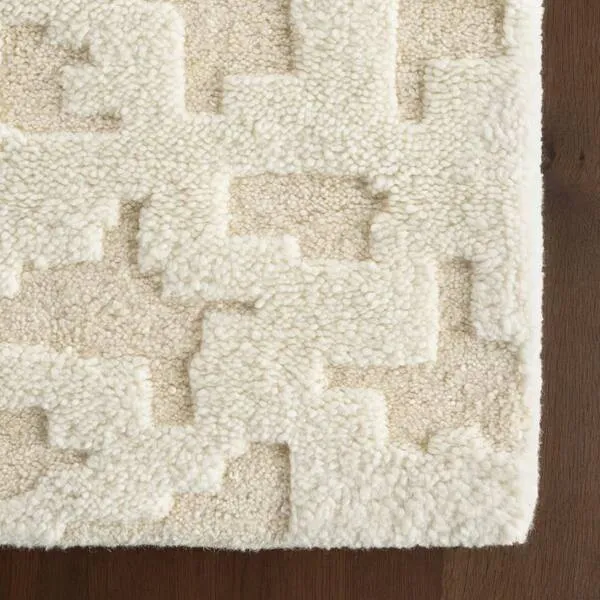
The hand micro-hooking technique we use at Dash and Albert involves pulling small, tight loops of wool through a woven backing one at a time. The loops sit close together and low to the ground which creates a dense flat surface.
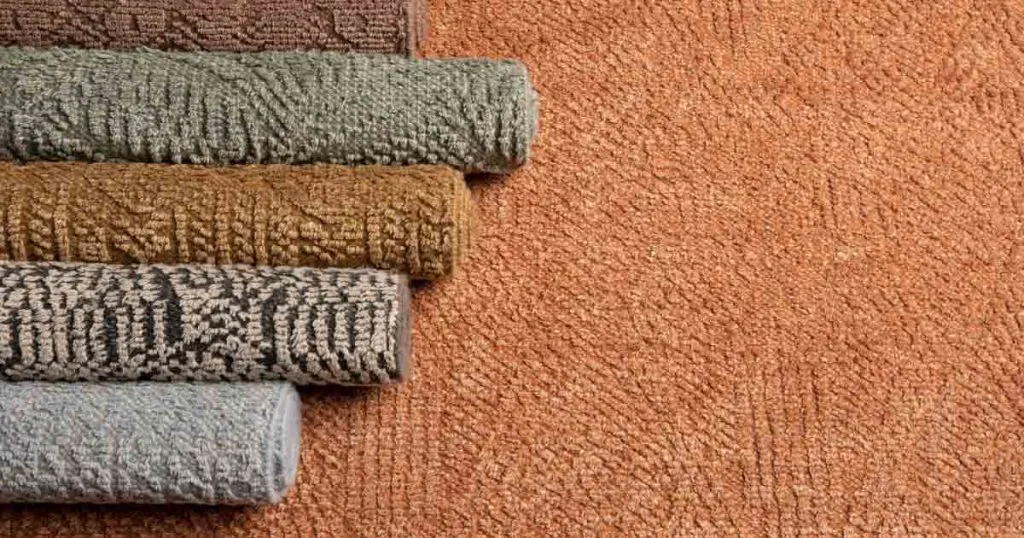
Most fibers would struggle with this. The loops are small and the tension on each one is constant every time someone walks across the rug. Weaker fiber breaks down at those stress points over time and the surface starts to look uneven or patchy.
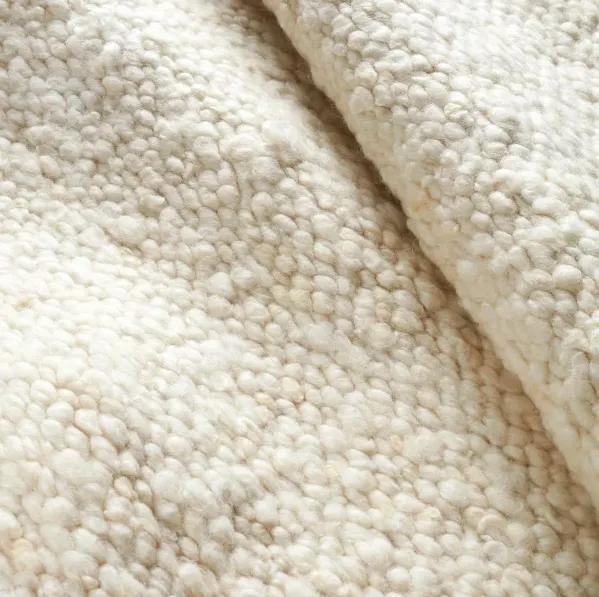
New Zealand wool holds up because of the natural crimp in each fiber strand. That crimp isn’t just texture. It acts mechanically like a coil spring. Pressure goes on the fiber, it compresses and when the pressure lifts, it bounces back. You don’t get permanent flattening in high traffic areas the way you do with synthetic pile or lower-grade wool.
Why Your Hallway Is Actually a Good Test
Most rug companies will tell you their products work in high-traffic areas. The hallway is where you find out if that’s true.
Foot traffic in a hallway is repetitive and concentrated. It hits the same path every single day. A rug that can’t handle that will show wear lines within a year. The pile flattens and stays flat. The colors look dull where people walk the most.
Our micro-hooked New Zealand wool rugs genuinely don’t do that. The loop structure keeps the surface even, and the natural resilience of the fiber means the rug looks consistent from edge to edge even after years of use. We’ve had customers tell us their hallway rug still looks the same as it did when they first put it down and that kind of feedback doesn’t come from a synthetic rug.
Lanolin Does a Lot of the Work
Wool naturally contains lanolin which is a waxy substance produced by sheep skin. Even after processing some lanolin remains in the fiber and it does something genuinely useful in a rug context.
Lanolin makes the fiber surface slightly water repellent. When you spill something on a wool rug, the liquid tends to bead on the surface for a moment before absorbing. That window of time is small but it’s usually enough to blot up the spill before it sets into a stain. No spray treatment. No chemical coating. Just the natural properties of the fiber are doing their job.
This is also why wool rugs don’t trap odors the way synthetic rugs can. The fiber breathes. Air moves through it, and that circulation keeps the rug from developing that flat, damp smell that low-pile synthetics sometimes hold onto.
The Environmental Side of This
Synthetic rugs shed microplastics every time they’re vacuumed or walked on. Those particles are small enough to pass through most filtration systems and they end up in waterways. It’s a slow process and most people don’t notice it but it adds up over millions of households.
Wool doesn’t do that. It’s a protein fiber that breaks down naturally at the end of its life. A wool rug that gets retired after ten or fifteen years will decompose in soil without leaving anything harmful behind. The sheep that produced the fiber are still alive, producing more wool the following year.
New Zealand also has some of the strictest animal welfare regulations in the farming industry. The sheep aren’t just incidental to the product. Their welfare is actively managed and that feeds directly into the quality of the fiber they produce.
What You’re Actually Paying For
A Dash and Albert wool rug costs more than a machine-made polypropylene rug. There’s no point pretending otherwise.
But a polypropylene rug typically looks tired within two or three years. The pile flattens permanently. The colors fade. The backing stiffens. By year five, most people have replaced it once already.
A well-kept New Zealand wool rug from us can sit on your floor for a decade and still look like it belongs there. When you split the cost of one good rug over ten years versus two or three cheap replacements over the same period, the numbers start to look very different.
FAQs
Is New Zealand wool actually softer than other wool?
Yes, and there’s a measurable reason for it. The fiber diameter is finer which means it bends more easily against your skin instead of feeling stiff or scratchy. It’s the same reason Merino clothing feels softer than standard wool knitwear.
Will my rug shed when it’s new?
A small amount of shedding in the first few weeks is normal. It’s just short fibers from the manufacturing process working their way out. Regular vacuuming moves it along faster and it stops on its own.
Can I put one of these rugs in my kitchen?
Yes. The lanolin in the wool gives it natural spill resistance and the low-pile micro-hooked construction means crumbs and debris sit on top rather than getting buried in the pile. Easy to sweep or vacuum.
What’s the best way to clean these rugs?
Blot spills straight away with a dry cloth and doesn’t rub for regular upkeep, vacuum without a beater bar. If the rug needs a deeper clean, a professional wool rug cleaner is the right call.
Are these rugs okay for homes with pets?
Yes. Wool doesn’t trap odors the way synthetic fiber does and the tight loop construction makes it harder for pet hair to work its way into the pile. It sits on the surface where you can vacuum it up easily.
How long should one of these rugs realistically last?
With basic care, ten to fifteen years is realistic. Some of our customers have had theirs considerably longer than that without any meaningful deterioration.
Does the rug feel different in summer versus winter?
Wool is naturally temperature-regulating so it won’t feel cold and hard underfoot in winter, the way tile or hardwood does. In warmer months, it doesn’t trap heat either. It just feels consistent which is one of those things you notice more with synthetic rugs that don’t have that quality.
A Note From Us
Rugs get walked on, dragged around and lived with every single day. They’re not decorative objects sitting in a room nobody uses. So the fiber they’re made from has to actually hold up to that kind of life and not just photograph well.
New Zealand wool does something that’s hard to explain until you’ve owned a rug made from it for a few years. The surface settles. The colors stay honest. The whole thing just keeps looking like it belongs in your home rather than looking like it’s slowly giving up. We’ve heard from customers who’ve had their Dash and Albert rugs for close to a decade and aren’t thinking about replacing them. That’s the honest outcome of starting with a material that was never going to let the rug down.